

Finding the right words when a friend loses a loved one is never easy. You want to offer comfort without saying the wrong thing. This guide provides over 50 heartfelt condolence messages suitable for the Singapore context. Whether you need a short WhatsApp message, a formal note for a flower wreath, or culturally specific wishes for Chinese, Malay, Christian, or Indian traditions, we have you covered. Use these examples to show you care during this difficult time.
Understanding Funeral Etiquette in Singapore
In Singapore, we live in a melting pot of cultures. This means that funerals can look very different depending on the race and religion of the bereaved family. When a friend loses someone, understanding the basic etiquette is just as important as the message you send.
The Importance of Timing and Medium
In our modern society, news of a passing often travels fast via messaging apps. It is entirely acceptable to send your initial condolences via WhatsApp or SMS. This provides immediate comfort to your friend. However, if you are close to the deceased or the family, a digital message should ideally be followed by a visit to the wake or a formal condolence card.
For a wake held at a HDB void deck, the atmosphere might be slightly more open, but respect is still paramount. If the service is at a funeral parlour like Mandai or Sin Ming, the setting is more enclosed and formal. In both cases, your presence often speaks louder than a text message.
Cultural Sensitivities to Keep in Mind
Before you write your message or visit, consider the traditions. For Chinese funerals, giving “Pek Kim” (condolence money) in a white envelope is standard practice to help with funeral costs. For Muslim funerals, financial contributions are also welcomed, often handed to a family member discreetly.
When delivering your message in person, dress appropriately. In Singapore, this usually means wearing white, black, or muted colours. Avoid bright red or festive colours, as these are considered disrespectful in almost all local funeral customs.
Short and Simple Condolence Messages for a Friend
Sometimes, simple is best. If you are sending a text message or signing a guestbook, you do not need to write a long essay. The goal is to let your friend know you are acknowledging their pain.
- “I am so deeply sorry for your loss.”
This is the universal standard. It is safe, polite, and genuine. - “Thinking of you and your family during this tough time.”
This shifts the focus to the well-being of the living, which is comforting. - “My heart goes out to you.”
A classic expression of empathy. - “Please accept my sincerest condolences.”
This is slightly more formal and works well for colleagues or friends you are not extremely close with. - “I was saddened to hear the news. Stay strong.”
A common phrase in Singapore, encouraging resilience. - “Sending you strength and love.”
When words fail, offering emotional support is a good alternative. - “Words cannot express how sorry I am.”
Admitting that there are no right words can be a comfort in itself. - “We are here for you if you need anything at all.”
Only say this if you truly mean it and are willing to help. - “Holding you close in my thoughts.”
A gentle way to say they are on your mind. - “May the memories of your loved one bring you comfort.”
Focusing on positive memories helps with the grieving process.
Condolence Messages for the Loss of a Parent

Losing a parent is a significant milestone in adulthood. In Singaporean culture, where filial piety is strong, this loss is felt deeply. Your message should acknowledge the role the parent played.
Messages for the Loss of a Father
Fathers are often seen as the pillars of the family.
- “Your father was a great man. He will be missed.”
Acknowledging the character of the deceased brings pride to the grieving family. - “I know how close you were to your dad. My heart breaks for you.”
Validating their specific relationship is very powerful. - “He leaves behind a wonderful legacy in you.”
This reminds your friend that their father lives on through them. - “Your father’s guidance and wisdom will never be forgotten.”
Touching on the guidance a father provides is deeply respectful. - “May you find comfort in the memories of your dad.”
Simple and effective.
Messages for the Loss of a Mother
Mothers are frequently the emotional centre of the home.
- “Your mother was such a kind and warm person.”
Complimenting her nature comforts the family. - “There is no love like a mother’s love. I am so sorry.”
Acknowledging the unique bond of a mother. - “She will always be with you in spirit.”
A reassuring thought for someone feeling abandoned. - “Your mum was an inspiration to us all.”
It helps to know that others admired her too. - “Sending love to you as you navigate this loss. Moms are irreplaceable.”
Validating the magnitude of the loss.
Culturally Specific Condolence Messages in Singapore
Singapore is a multi-religious society. Using a culturally appropriate phrase shows a deeper level of respect and understanding.
Chinese Condolence Messages (Mandarin & English)
For Chinese families, whether Taoist or Buddhist, the focus is often on the peaceful transition of the deceased.
- “Jie Ai Shun Bian (节哀顺变).”
This translates to “restrain your grief and accept the inevitable changes.” It is the most standard formal Chinese condolence. - “May they rest in peace and have a smooth journey.”
This refers to the journey to the afterlife, which is central to Taoist and Buddhist beliefs. - “Yi Lu Zou Hao (一路走好).”
This means “have a safe journey.” It is a wish for the deceased’s spirit. - “May the Buddha’s light guide them to the Pure Land.”
Appropriate specifically for Buddhist families. - “They are now free from suffering.”
In Chinese culture, seeing death as a release from illness or old age is a common perspective.
Malay and Muslim Condolence Messages
For Malay friends, using Islamic terminology is highly appreciated.
- “Salam Takziah.”
This is the standard phrase for “condolences” in Malay. - “Inna lillahi wa inna ilayhi raji’un.”
This is an Arabic phrase from the Quran meaning “Verily we belong to Allah, and verily to Him do we return.” It is the most appropriate thing to say to a Muslim. - “May Allah grant you patience (Sabr) and strength.”
Patience is considered a virtue during grief in Islam. - “May Allah place them among the righteous.”
A prayer for the deceased’s standing in the afterlife. - “Al-Fatihah.”
You can say this to indicate you are reciting the opening chapter of the Quran for the deceased.
Indian and Hindu Condolence Messages
For Hindu friends, the focus is often on the soul (Atma) and its journey.
- “Om Shanti.”
A universal invocation of peace. - “May their Atma find eternal peace (Moksha).”
Referring to the liberation of the soul. - “Praying for the departed soul to rest in peace.”
A standard, respectful sentiment. - “May God give you the strength to bear this loss.”
Focusing on the family’s resilience. - “They will always live on in your memories.”
Acknowledging the cycle of life and memory.
Christian and Catholic Condolence Messages

For Christian families, the hope of the resurrection and God’s comfort is central.
- “May God’s peace be with you and your family.”
Invoking divine peace. - “They are now in the arms of the Lord.”
A comforting image of safety and rest. - “Rest in Peace.”
The classic Christian sentiment. - “Praying for comfort and strength for you all.”
Letting them know you are actively praying for them. - “We mourn with hope.”
A reference to the biblical belief that death is not the end.
Condolence Messages for Sudden or Tragic Losses
When a death is unexpected, standard messages can sometimes feel insufficient. You must be extra sensitive. Avoid saying “it was their time” or “everything happens for a reason,” as these can be hurtful in tragic circumstances.
- “I am completely shocked by the news. I am so sorry.”
Validate the shock; it is okay to admit it. - “This is heartbreaking. I am here for whatever you need.”
Acknowledge the pain directly. - “I cannot imagine what you are going through.”
Do not pretend to understand their specific pain. - “We are all devastated by this sudden loss.”
Shared grief can be comforting. - “Take it one breath at a time.”
For sudden trauma, even taking it “one day at a time” feels too long. “One breath” is more manageable.
What to Write on a Condolence Flower Card
If you are ordering a fresh flower wreath or a blanket of flowers to be delivered to the wake (a common practice in Singapore), the card message needs to be brief.
- “With Deepest Sympathies.”
Formal and appropriate for professional or personal relationships. - “Forever in our hearts.”
Short and emotive. - “Rest in Peace.”
Standard and clear. - “Fondly Remembered by [Your Name].”
Good for friends or colleagues. - “Till we meet again.”
A sentiment of hope.
Digital Etiquette: Sending Condolences via WhatsApp
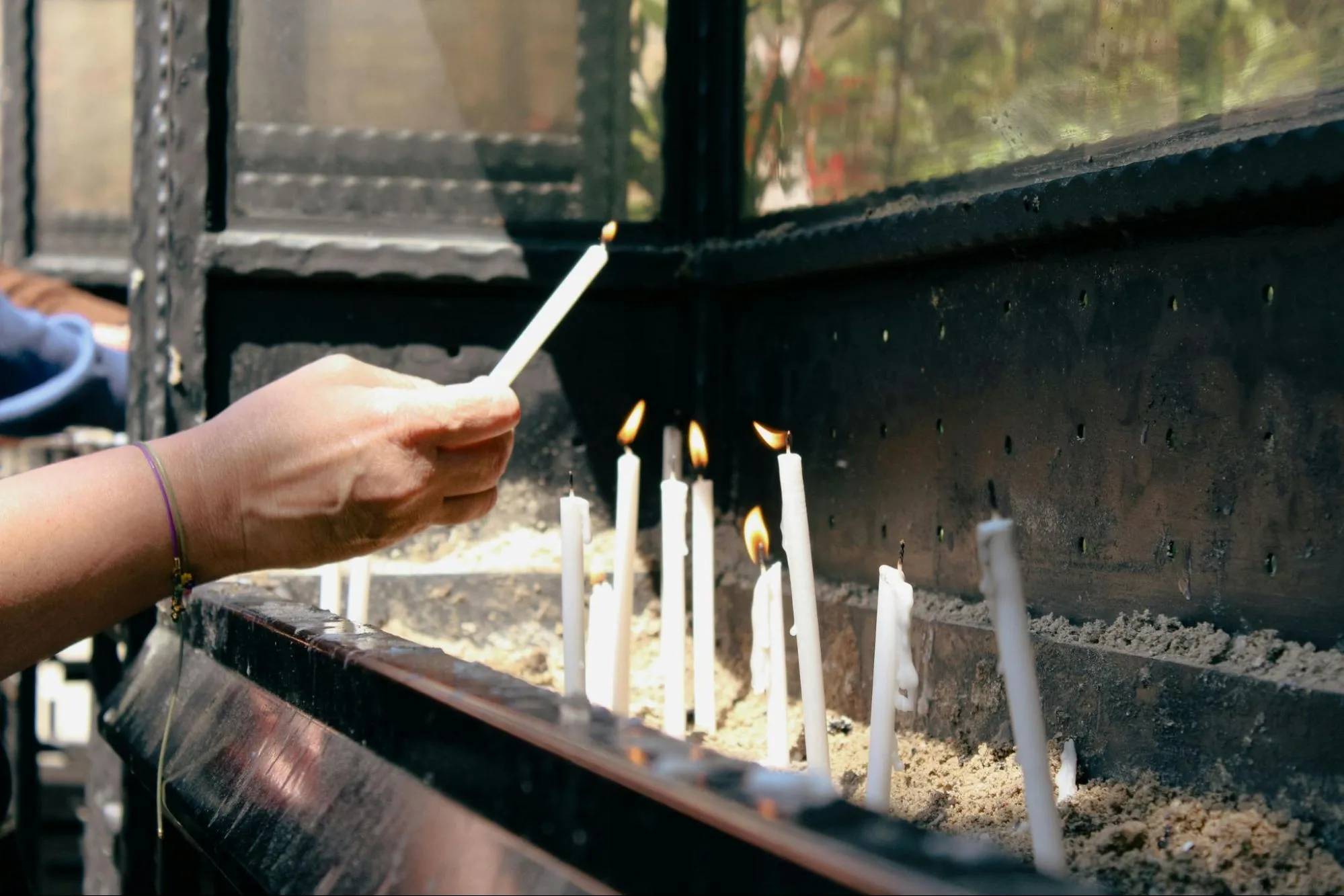
In Singapore, WhatsApp is our primary mode of communication. It is acceptable to send condolences this way, but there are rules to follow.
Do’s and Don’ts of WhatsApp Condolences
- Do keep it sincere. A simple text is better than silence.
- Do not use excessive emojis. A single “praying hands” or “heart” emoji is fine, but avoid crying faces or cartoons. It can come across as childish or insincere.
- Do not expect a reply. Your friend is overwhelmed with messages and funeral logistics. If they “blue tick” you but don’t reply, do not take it personally.
- Do follow up. A few days after the funeral, send another message to check in. That is when the silence hits them hardest.
Practical Ways to Support a Grieving Friend Beyond Words
Words are important, but in Singapore, actions often speak louder. Funerals here involve a lot of logistics, from booking the void deck to catering food for guests.
Offering “Pek Kim” (Condolence Money)
In Chinese custom (and practiced by many others in Singapore), giving money is the most practical way to help.
- The Envelope: Use a white envelope. Do not use a red packet (Ang Bao).
- The Amount: It depends on your relationship. For acquaintances,
- 30−50 is common. For close friends, 50−100 or more.
- The Note: Write your full name clearly on the back of the envelope so the family can record it in their funeral book.
Helping with Logistics
If you are a close friend, offer specific help. Instead of saying “let me know if you need anything,” say:
- “Can I drive your relatives to the Mandai Crematorium?”
- “Do you need me to tapau (takeaway) dinner for your family tonight?”
- “I can sit at the reception table and help record the donations for a few hours.”
These specific offers relieve the burden on the family and show true reliability.
Conclusion On Condolence Message To A Friend
Finding the right way to say condolence to a friend is about sincerity, not perfection. Whether you choose a traditional Chinese phrase, a Quranic verse, or a simple “I am sorry,” what matters most is that you reached out.
In the Singapore context, being aware of cultural nuances, like the appropriate dress code or the giving of condolence money, adds a layer of respect to your message. Remember, the goal is to let your friend know they are not walking this path alone.
If you are unsure about funeral arrangements or need professional advice during this difficult time, please do not hesitate to contact us. We are here to support you.
Visit Funeral Guru for more resources.
Frequently Asked Questions About Condolence Message To A Friend
What Is A Short Condolence Message To A Friend?
A short message should be direct and empathetic. Examples include “Deepest sympathies to you and your family,” “Thinking of you during this difficult time,” or simply “I am so sorry for your loss.” These are perfect for SMS or WhatsApp when you want to offer immediate support without overwhelming them.
What To Write On A Condolence Money Envelope In Singapore?
On a condolence money envelope (often called “Pek Kim” or “Bai Jin”), you should write your full name clearly. This allows the family to record the contribution in their register. You can also add a very short phrase like “Deepest Sympathies” or “Rest in Peace” alongside your name. Always use a white envelope, never red.
How Much Condolence Money Is Appropriate In Singapore?
The amount varies based on your closeness to the deceased or the family. For colleagues or acquaintances, $30 to $50 is a standard gesture. For friends, $50 to $100 is common. For close family friends or relatives, the amount is usually higher. It is traditional to give odd numbers (e.g., $30, $50, $100, though $100 is even, it is accepted as a single note, but avoid numbers ending in 4 like $44).
How Do You Wish Someone Condolences On WhatsApp?
When using WhatsApp, keep the message sincere but brief. Start with “I just heard the news and I am so sorry.” Avoid using too many emojis or GIF images. It is also polite to end with “No need to reply to this, just wanted you to know I’m thinking of you,” which relieves the pressure on them to respond immediately.
What To Say When A Friend Loses A Parent In Singapore?
When a friend loses a parent, acknowledge the significance of the loss. You can say, “Your father/mother was a wonderful person, and they will be missed.” In Singapore, where family ties are close, validating the parent’s legacy and the care the child provided is very comforting.
Is It Appropriate To Send Flowers To A Wake In Singapore?
Yes, it is very appropriate. However, you must check the religion first. For Christian, Catholic, and Free-Thinker funerals, fresh wreaths are welcomed. For Chinese funerals, wreaths or blankets of flowers are common (often with a message like “Rest in Peace”). For Muslim funerals, flowers are less common but sometimes accepted; it is better to ask or give money instead. For Hindu funerals, garlands are used, but check with the family before sending large arrangements.