
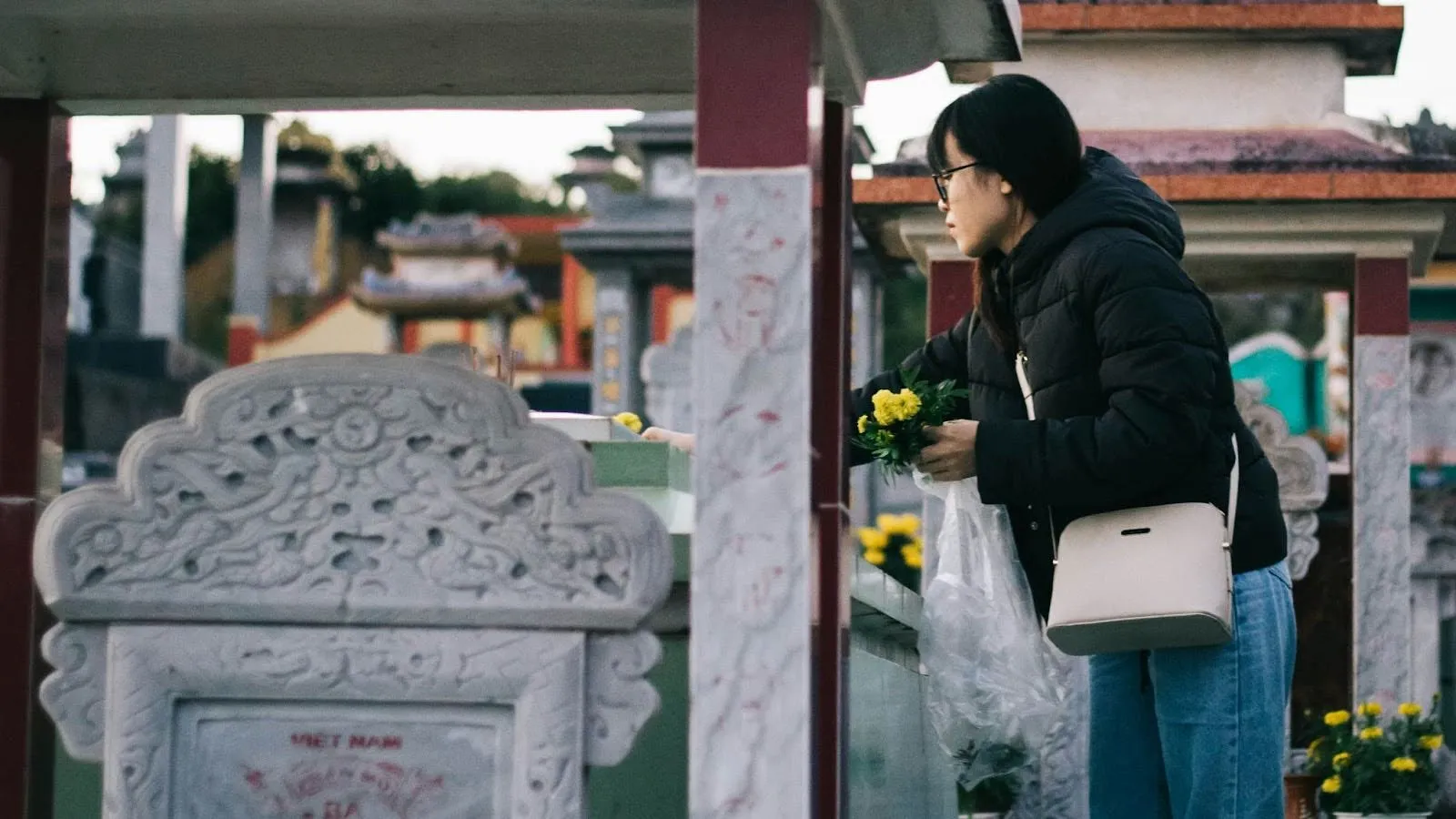
Navigating funeral customs in Singapore’s multicultural society can be overwhelming. Whether you are arranging a final send-off or attending a wake to support a friend, knowing the right etiquette is a sign of deep respect.
This guide covers essential dos and don’ts, from appropriate attire and condolence money (“Pek Kim”) to specific religious traditions, helping you offer comfort with confidence and dignity during these solemn moments.
1. Dressing Appropriately for the Occasion
In Singapore, the way you dress for a funeral is the first signal of respect you send to the bereaved family. While our tropical climate generally allows for casual dress in daily life, a funeral requires a shift towards modesty and sombre tones. You do not need to wear a full suit or formal wear, but you must look presentable and respectful.
General Rule: Muted and Modest
The safest choice for any funeral in Singapore is clothing in muted, neutral colours. Stick to black, white, dark blue, or grey. These colours blend in and do not draw attention to yourself. The focus should remain on the deceased and the grieving family.
What to Avoid:
- Bright Colours: Strictly avoid red, pink, or bright yellow. In many Asian cultures, especially Chinese tradition, red is exclusively reserved for weddings and joyous festivals like Chinese New Year. Wearing red to a funeral is seen as a direct insult or a sign of celebration.
- Busy Patterns: Avoid loud floral prints or distracting logos.
- Revealing Clothing: Modesty is key. Sleeveless tops, miniskirts, plunging necklines, and shorts above the knee are generally inappropriate.
- Footwear: While Singapore is a flip-flop nation, try to wear covered shoes or sandals with a back strap. Slippers (thongs) are considered too casual for such a solemn event.
Cultural Nuances in Attire
Chinese Funerals
Family members wear specific mourning attire, often white t-shirts and trousers, sometimes with sackcloth patches depending on their hierarchy in the family. As a guest, you are not expected to wear this. A plain white shirt and dark trousers or jeans are perfect.
Note: If the deceased was over 80 years old, it might be considered a “happy mourning” (Xi Sang). In these rare cases, family members might wear pink or red, but as a guest, you should still stick to safe, neutral colours unless specifically told otherwise.
Muslim Funerals
Modesty is the absolute priority here. For women, loose-fitting clothing that covers the arms and legs is respectful. While non-Muslim women are not strictly required to wear a headscarf (tudung), wrapping a loose scarf around your shoulders or head is a thoughtful gesture. Men should wear long trousers; shorts are generally frowned upon in a religious setting.
Hindu Funerals
In Hindu tradition, white is the colour of purity and mourning. Unlike Western cultures where black is the standard for grief, some traditional Hindu families may view black as inauspicious. If you are attending a Hindu funeral, wearing white or light neutral colours is often the most culturally sensitive choice.
Christian and Catholic Funerals
The dress code here mirrors Western standards but is adapted for Singapore’s heat. Smart casual is the norm. A dark polo tee or button-down shirt with trousers is acceptable. For more formal church services, you might see more people in ties and jackets, but it is rarely mandatory for guests.
2. Arriving at the Wake or Funeral Parlour
In Singapore, wakes are commonly held in three locations: the void deck of an HDB flat, a landed property, or a dedicated funeral parlour. The location often dictates the “vibe” and logistics of your arrival.
Punctuality and Timing
If you are visiting a wake (the period before the cremation or burial), timing is generally flexible. Most void deck wakes run 24 hours, but visiting hours for guests are typically between 10:00 AM and 10:00 PM.
- Late Night Visits: While family members may stay overnight to keep vigil, try not to visit past 10:00 PM unless you are a very close friend or relative. The family needs rest.
- Funeral Day: If you are attending the actual funeral procession or church service, you must be punctual. Arrive 15 to 20 minutes before the stated time. The hearse will leave strictly on schedule.
Entering the Space
As you approach the funeral area, adjust your demeanour.
- Silence Your Phone: Put your mobile phone on silent or vibrate mode immediately.
- Approach Quietly: If there are many people, do not shout or laugh loudly.
- Acknowledge the Family: Before you go to the casket, look for the immediate family. They are usually seated near the front or standing by the reception table. A nod, a light handshake, or a soft “I am sorry for your loss” is the first step.
- Wait for Prayers to End: If you arrive while monks are chanting, a priest is leading a prayer, or the family is performing a ritual, stop and wait at the side. Do not walk across the prayer area or interrupt the proceedings. Wait for a natural break before approaching the family or the casket.
3. Paying Respects to the Deceased
This is the part that makes many guests anxious. “What do I do? Which hand do I use? Do I have to bow?” It is important to know that in Singapore, families are generally very understanding of guests who do not share their religion. However, following the basic customs shows you care.
Non-Religious / General Gestures
If you are a free-thinker or do not wish to participate in religious rites, you can still pay your respects with dignity.
- Walk to the front of the casket.
- Stand silently for a few seconds.
- Bow your head slightly as a sign of respect.
- You may reflect on the person’s life or offer a silent wish for their peace.
- Nod to the family members standing nearby and return to your seat.
Buddhist and Taoist Customs
These are the most common funerals in Singapore and often involve incense (joss sticks).
- Offering Incense: A family member might offer you a lit joss stick. It is polite to accept it.
- How to Hold It: Hold the joss stick with both hands.
- The Bow: Stand in front of the altar. Bow three times (or simply once, depending on the specific dialect custom).
- Placing the Incense: Place the joss stick upright in the large urn. Use your left hand to place it if possible, as the right hand is sometimes associated with daily tasks, while the left is considered more respectful in some spiritual contexts (though this is a minor detail).
- Declining: If your own faith prohibits you from holding incense, simply tell the family member, “I will offer a silent prayer instead.” They will understand. Stand before the casket, press your palms together (in a prayer or Namaste gesture) or simply bow your head.
Christian and Catholic Customs
- Viewing the Body: The casket is usually open. You are encouraged to walk up and view the deceased one last time.
- Prayer: You may stand near the casket and say a silent prayer.
- Service Participation: During the service, there will be hymns and scripture readings. You are welcome to sing along if you know the words, or simply sit respectfully and listen. You are not required to take Communion at a Catholic mass if you are not Catholic.
Muslim Customs
- Segregation: Men and women may be seated in separate areas. Observe where others are sitting and follow suit.
- Viewing: You may view the face of the deceased before the body is shrouded (wrapped in white cloth).
- No Photos: It is strictly forbidden to take photos of the deceased.
- Prayer Times: If the congregation begins the funeral prayer (Jenazah), stand quietly at the back or side. Do not walk in front of anyone who is praying.
Hindu Customs
- The Casket: The casket is often open, and the body may be adorned with flowers and garlands.
- The Lamp: There is often a traditional oil lamp lit near the head of the deceased. Be careful not to bump into it or disturb the flame.
- Flowers: Guests may be invited to place flowers at the feet of the deceased. Follow the lead of the family members.
- Attire Note: In some strict Hindu traditions, menstruating women are advised not to approach the casket, though this is becoming less strictly enforced in modern Singapore.
4. Offering Condolence Money (Pek Kim / Sumbangan)
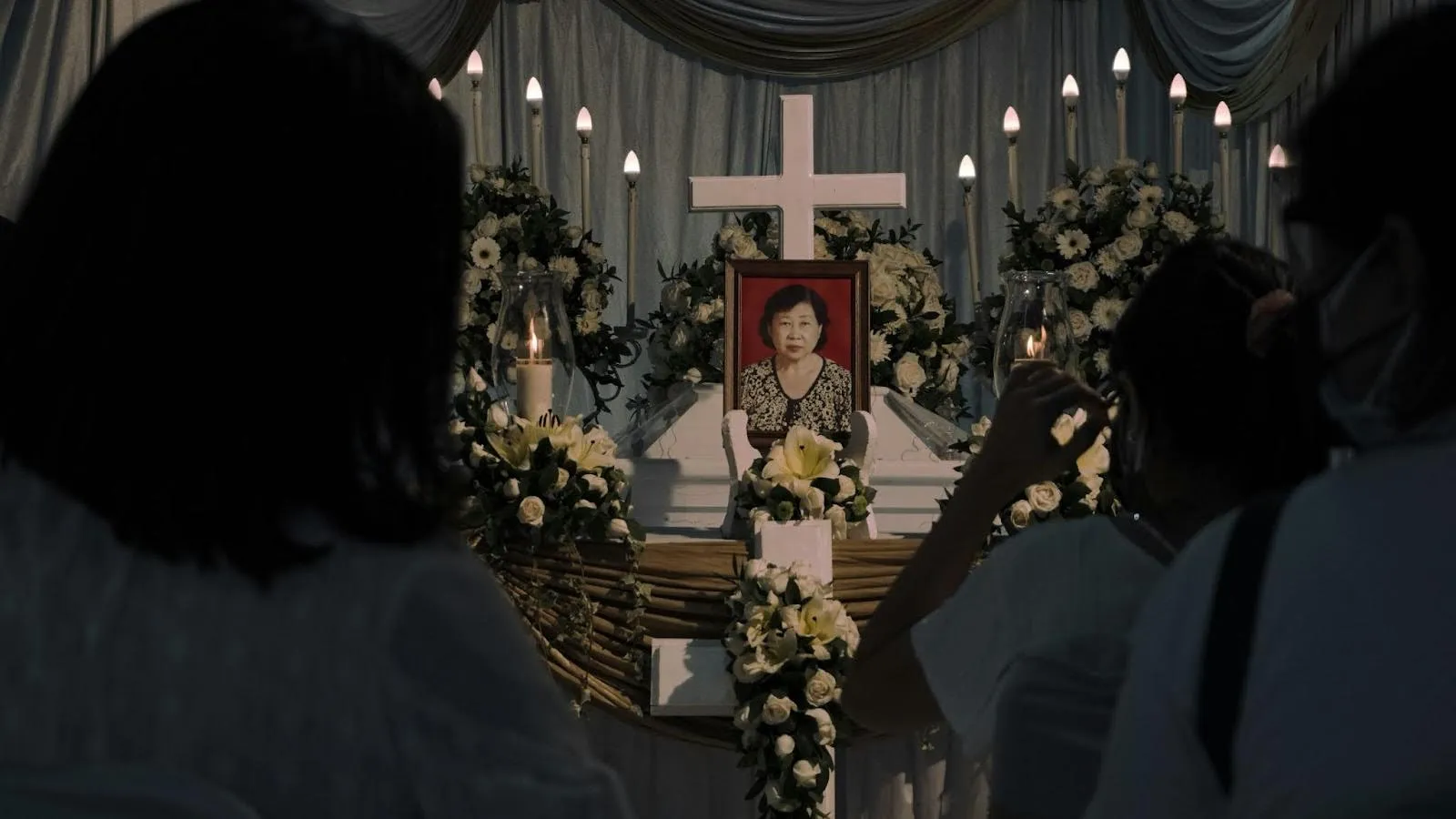
Giving money is a practical way to help the bereaved family cover the high costs of a funeral in Singapore. This practice is common across almost all cultures here.
How Much to Give?
There is no fixed price list, but there are “market rates” on how much to give during funeral based on your relationship with the deceased and your financial ability.
- Acquaintances / Distant Relatives: $30 to $50.
- Friends / Colleagues: $50 to $100.
- Close Family / Best Friends: $100, $200, or more.
- VIPs / Business Associates: Companies often give larger sums, sometimes ranging from $300 to $500, often accompanied by a floral wreath.
The “Odd Number” Rule (Chinese Tradition)
This is a critical rule for Chinese funerals. The amount you give should start with an odd number.
- Correct: $30, $50, $70, $100, $150, $300.
- Incorrect: $40, $80.
- Why? Even numbers represent “double happiness” and are reserved for weddings (Ang Baos). Odd numbers symbolize that the event is singular and sad, we do not want “double” funerals.
- Note: While $100 is technically an even number, it is accepted as a standard whole number. However, some traditional people prefer $101 or $110 to be safe.
Preparation and Presentation
- The Envelope: Use a white envelope. Funeral parlours usually provide these at the reception table. Never use a red packet.
- Writing: Write your full name clearly on the envelope. This helps the family track contributions so they can thank you or reciprocate in the future. You can write a short phrase like “Deepest Condolences.”
- Digital Giving: Singapore is digital-first. Many families now display a PayNow QR code at the reception table. This is perfectly acceptable and very convenient. If you use PayNow, indicate your name in the reference field.
- Handing it Over: Give the envelope to the person manning the reception table (usually a relative). They will record your name in a register (condolence book).
5. Sending Flowers and Wreaths
Sending funeral flowers serves as a visual tribute and a way to share the burden of grief. However, sending the wrong type can be awkward.
Acceptable Flower Types
- Fresh Flowers: Chrysanthemums, lilies, carnations, and orchids are standard funeral flowers.
- Colours: Stick to white, yellow, and pale pink. White represents purity and mourning.
- Taboo: Do not send red roses or bright red bouquets to a Chinese funeral.
When to Send (and When Not To)
- Chinese / Christian / Free-thinker: Large floral wreaths on stands are very common. Recently, “LED Blankets” or electronic wreaths have become popular in Singapore. These are large banners with lit-up messages. They are rented, not bought, and are very prominent at HDB void decks.
- Muslim: Flowers are generally not customary at Malay/Muslim funerals. The focus is on simplicity and speed of burial. It is much better to give the money (Sumbangan) to the family to help with expenses rather than spending it on flowers.
- Hindu: Garlands are used, but check with the family first. Sometimes there is limited space at the home, and large wreaths can be an obstruction.
6. Etiquette During the Wake
Once you have paid your respects, you will likely sit at the tables provided. This is a time to offer companionship to the family.
Conversation Topics
- Tone: Keep your voice low. Laughter should be subdued.
- What to Say: “I am so sorry for your loss” or “He/She was a good person” is sufficient.
- What NOT to Say: Avoid asking for graphic details about the death (e.g., “Was there a lot of blood?” or “Did he suffer?”). Do not gossip about family inheritance or drama.
- Sharing Memories: If the timing feels right, share a brief, positive memory of the deceased. “I remember when your father helped me with…” is a comforting thing for a grieving family to hear.
Food and Drink
Bereaved families in Singapore often provide refreshments for guests. This is a way for them to show hospitality even in their grief.
- Accepting: It is polite to accept a drink (water, packet drink, or coffee) or a small snack (peanuts, melon seeds).
- Buffet: If there is a buffet catering, you are welcome to eat, but do not treat it like a party. Eat efficiently and clean up after yourself.
- Don’t Linger: If the wake is crowded and seats are limited, pay your respects, chat briefly with the family, have a drink, and then leave to make space for other guests. Staying for about 45 minutes to an hour is standard.
Photography and Social Media
This is a modern etiquette minefield.
- The Deceased: Never, ever take a photo of the face of the deceased in the casket. It is seen as highly disrespectful and bad luck.
- Selfies: Do not take selfies at a funeral.
- Social Media: If you want to post a tribute, take a photo of the floral wreaths or a general wide shot of the location (from a distance) if appropriate. Do not “tag” family members who might be in a state of distress or looking unkempt.
7. Leaving the Wake: Customs and Taboos
Leaving a funeral in Singapore, especially a Chinese one, involves specific rituals to ensure you don’t “bring the sadness home.”
The Red Thread and Sweet Candy
At the reception table of a Chinese wake, you will often see a bowl of red threads and a bowl of hard candies.
- Red Thread: Before you leave, take a piece of red thread. Tie it loosely around your finger. This is believed to ward off the “yin” (negative) energy of the funeral.
- The Rule: Do not bring this thread into your home. Pull it off and throw it into a public bin before you enter your house.
- Sweet Candy: Take a candy and eat it as you leave. The sweetness is meant to wash away the bitterness of the sorrow you have just witnessed.
Saying Goodbye
Language matters when you depart.
- Chinese Taboo: Do not say “See you later” or use the standard Mandarin goodbye “Zai Jian” (which literally means ‘see you again’). This implies you want to meet the family again at another funeral.
- What to Say: Simply say “Take care,” “I will make a move first,” or just give a silent nod and wave.
- Don’t walk the guest out: If you are the host, do not walk your guests to their car. In Chinese custom, this signifies that you are “sending them off,” which is bad luck in this context. Guests should show themselves out.
Conclusion On Funeral Etiquette
Funerals are never easy, but observing proper etiquette provides a steady framework for everyone involved. By dressing modestly, respecting religious rites, and understanding local customs like the giving of Pek Kim, you allow the bereaved family to focus on their healing. Your presence and respect are the most valuable gifts you can offer during their time of loss.
If you require assistance with funeral arrangements or have further questions about specific customs, please contact us or visit our website Funeral Guru.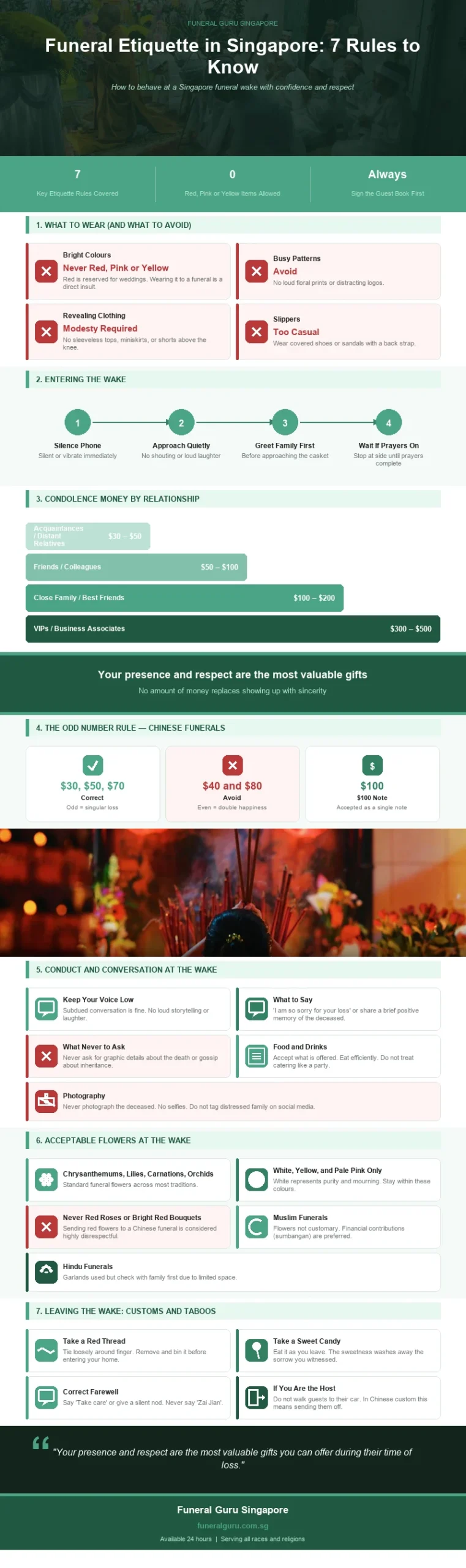
Frequently Asked Questions About Funeral Etiquette
How Much Condolence Money To Give In Singapore?
There is no mandatory amount, but typical contributions range from $30 to $50 for acquaintances, and $50 to over $100 for friends and relatives. For Chinese funerals, ensure the amount starts with an odd number (e.g., $30, $50) to signify a sombre occasion.
What To Wear To A Funeral In Singapore?
Wear modest, loose-fitting clothing in muted colours like white, black, dark blue, or grey. Avoid bright colours, especially red, as it is associated with celebration. Sleeveless tops, shorts, and slippers are generally considered disrespectful.
Can I Wear Jeans To A Funeral In Singapore?
Yes, dark-coloured jeans are generally acceptable if they are smart-casual and not ripped or distressed. Pair them with a collared shirt or a modest blouse. However, for a formal church service or a traditional family, dress trousers are a safer choice.
What Is The Red Thread At Funerals?
At Chinese funerals, a red thread is often provided for guests. It is a superstitious custom believed to ward off bad luck or negative energy. Guests should tie it loosely around a finger and discard it before they enter their own homes.
Do You Give Money For Muslim Funerals?
Yes, giving money (Sumbangan) is a practical and appreciated way to support the family with burial costs. Unlike Chinese customs, there is no strict “odd number” rule, and flowers are rarely sent. Hand the money discreetly to a family member in an envelope.
What Flowers To Send For A Chinese Funeral?
White or yellow chrysanthemums, lilies, and orchids are the most appropriate choices. Avoid red flowers, as red is a celebratory colour. It is also common to send condolence wreaths or “blankets” (LED banners) to the funeral parlour or void deck.