
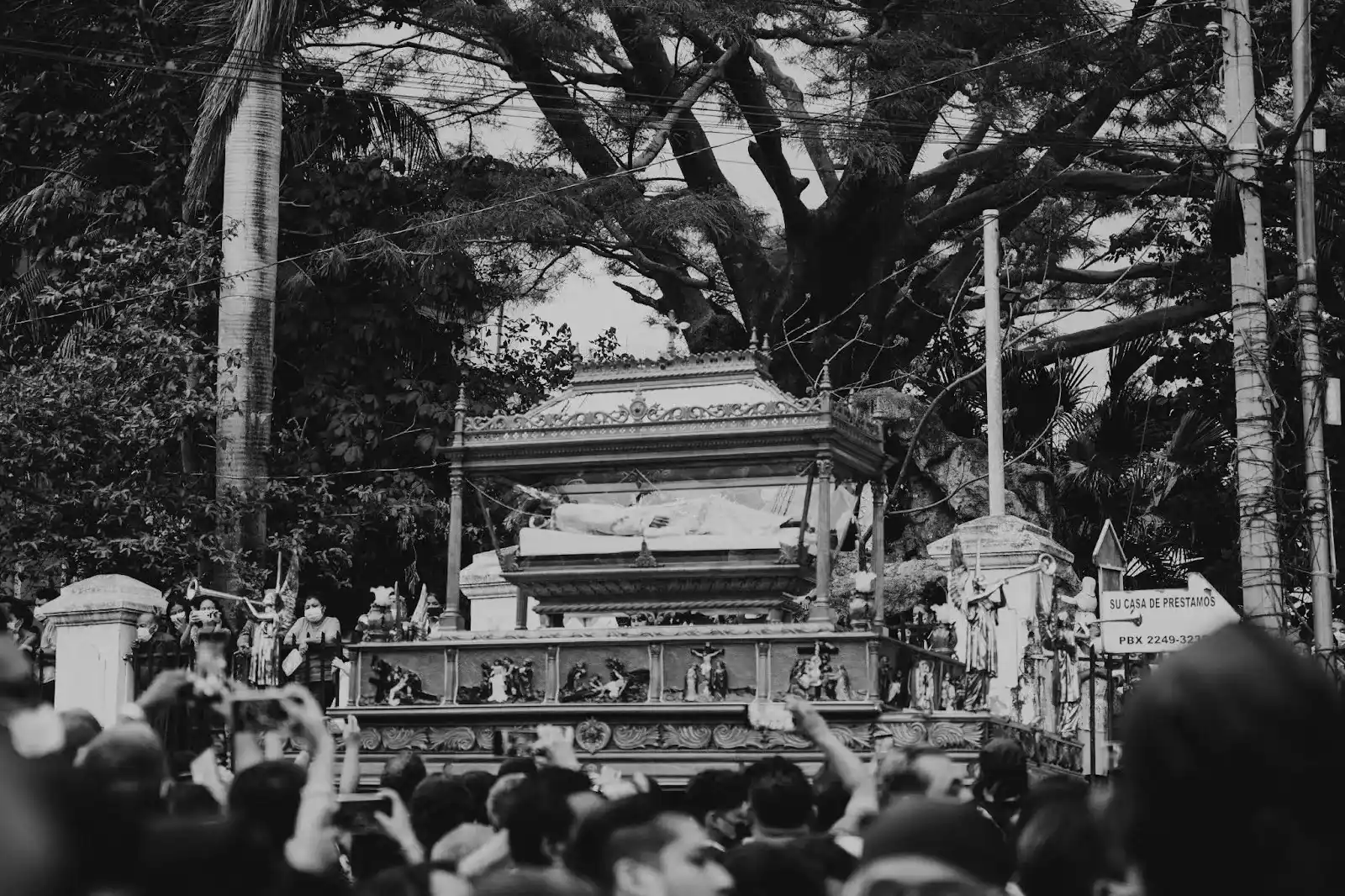
Navigating a funeral procession in Singapore requires sensitivity and awareness of local traffic and cultural rules. Whether you are driving in the cortege, encountering one on the road, or walking as part of the send-off, safety and respect are paramount. Generally, processions drive slowly in the left lane with hazard lights on. Other drivers should yield but are not legally required to stop.
This guide covers specific etiquette for Chinese, Muslim, and general services to help you honour the bereaved professionally and safely during this final journey.
Understanding the Significance of the Funeral Procession (Cortege)
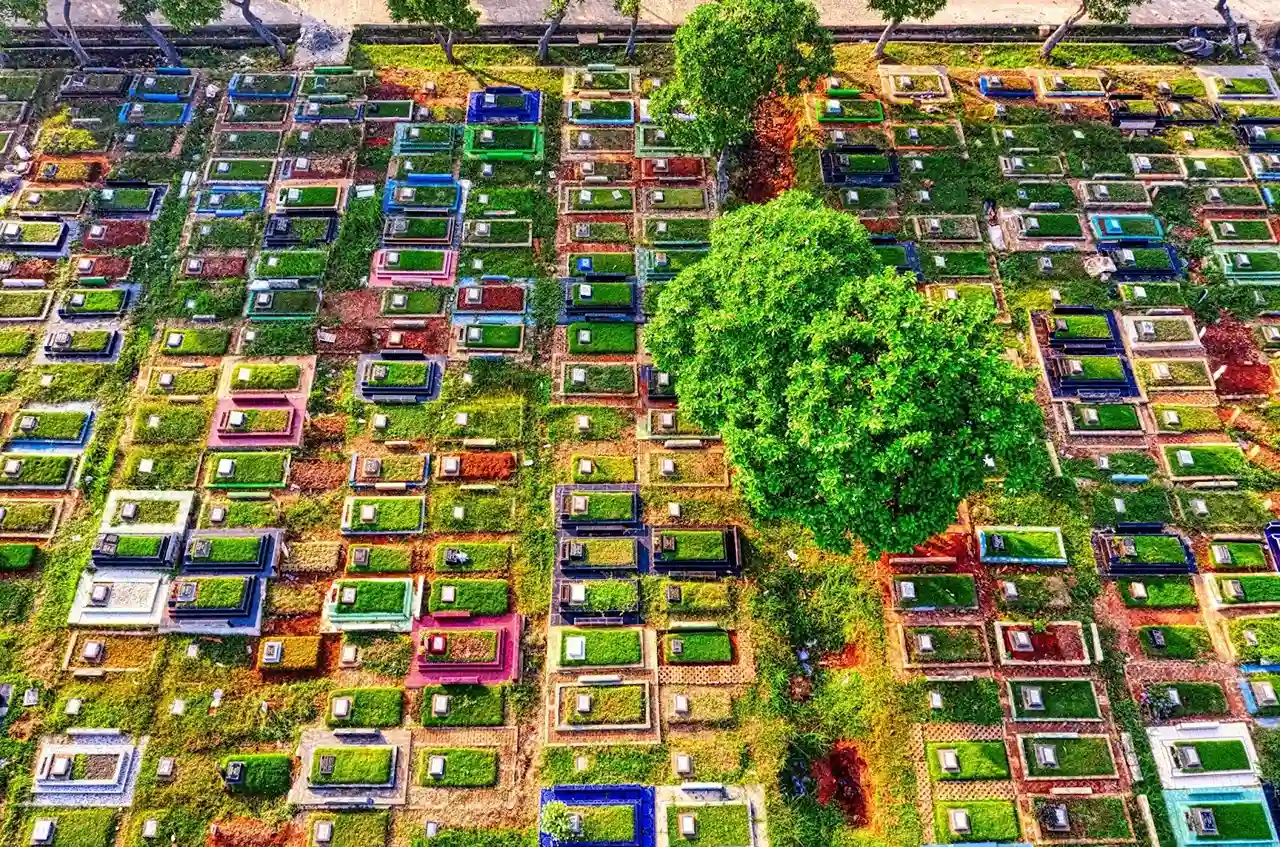
In Singapore, the funeral procession is often referred to as the “cortege.” This is the convoy of vehicles that follows the hearse from the place of the wake to the final resting place. The wake is usually held at a funeral parlour, a landed property, or arguably most commonly, the void deck of an HDB block. The destination is typically Mandai Crematorium, Choa Chu Kang Cemetery, or a columbarium.
This journey is known as the “final journey” for the deceased. It is a moment of immense emotional weight for the bereaved family. Physically moving the casket from the wake to the crematorium or burial ground symbolises the act of “sending off” their loved one. It marks the transition from the period of mourning at the wake to the final farewell.
Singapore is a multi-cultural society. While our customs may differ, there is a shared communal respect for these processions. Whether the hearse is an elaborately decorated Chinese glass hearse or a simple Muslim van, the etiquette remains largely grounded in respect and safety. Understanding how to behave, whether you are part of the family or a stranger on the road, ensures that this solemn occasion proceeds without disruption.
7 Essential Rules for Driving in a Funeral Procession
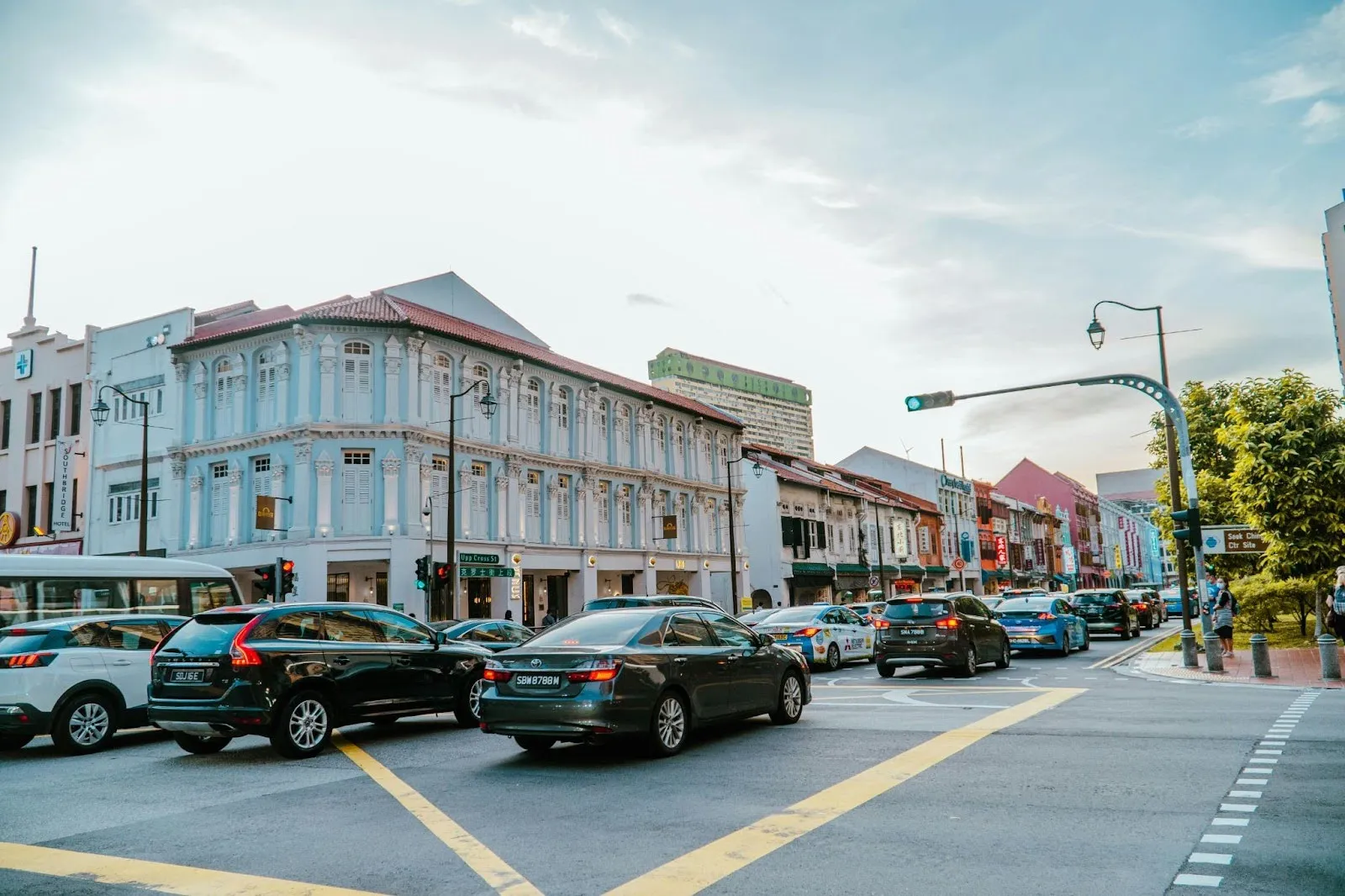
If you are a family member or a friend attending the funeral with your own vehicle, driving in a convoy requires discipline. It is not the same as driving alone. You are part of a unit. Here are the 10 essential rules you must follow when driving in a funeral cortege in Singapore.
1. Turn on Your Headlights and Hazard Lights
As soon as the procession begins, you must turn on your headlights and hazard lights. This is the universal signal in Singapore that your vehicle is part of a funeral convoy. It visually identifies you to other road users, indicating that you are moving as a group. This helps prevent other drivers from cutting in between you and the car in front. It also signals to pedestrians that a slow-moving column of vehicles is approaching.
2. Stick to the Left Lane
In Singapore, the left lane is designated for slower traffic. As a funeral procession moves at a reduced speed, you must stay in the left-most lane. This allows faster traffic to pass you on the right without causing congestion. The only exception to this rule is if the lead hearse signals to change lanes to make a turn, enter an expressway, or avoid an obstruction. Always follow the lead of the hearse or the traffic escort if one is present.
3. Maintain a Consistent Low Speed
The unspoken rule for funeral processions in Singapore is to drive at a moderate, consistent speed. This is usually between 30km/h and 50km/h on normal roads. Speeding in a procession is dangerous and disrespectful.
The goal is to keep the formation tight. If you drive too fast, you may close the gap too quickly and be forced to brake hard, causing a chain reaction behind you. If you drive too slowly, you risk losing the car in front of you at a traffic light.
4. Follow the Hearse at a Safe Distance
You must not tailgate the vehicle in front of you, but you also should not leave a massive gap. If the gap is too large, other drivers on the road might mistake it for open space and merge into the procession, breaking the line. A good rule of thumb is to keep a two-car length distance. This provides enough room to brake safely if the convoy stops suddenly, but is close enough to show you are together.
5. Adhere to All Traffic Laws
It is a common misconception that funeral processions have special legal immunity. In Singapore, funeral processions must obey all traffic laws. If the traffic light turns red, you must stop. You cannot run a red light just because the hearse made it through on green. If the convoy gets split up at a traffic junction, do not panic.
Proceed when the light turns green and catch up slowly, or rely on your GPS to meet at the destination. You must also give way to pedestrians at zebra crossings.
6. Keep the Procession Tight at Junctions
Junctions and yellow boxes are where processions often get broken up. To minimise this, try to move through junctions efficiently. Do not hesitate unnecessarily. However, do not block a yellow box junction. If the traffic ahead is not moving, do not enter the box, even if you want to stay close to the car in front. Blocking traffic causes frustration for other drivers and reflects poorly on the procession.
7. Parking at the Crematorium or Cemetery
When you arrive at Mandai Crematorium or Choa Chu Kang Cemetery, the driving etiquette continues. Follow the instructions of the marshals or funeral staff implicitly. They need to park the cars swiftly to ensure the casket can be moved to the hall on time. Do not be picky about parking spots. Park your car at the designated carpark and join the family at the assembly area.
Etiquette for Other Drivers Encountering a Procession
If you are a member of the general public driving on Singapore roads, encountering a funeral procession requires patience and courtesy. While you have your own destination to reach, a small act of kindness goes a long way.
Yielding Right of Way
Even if you technically have the right of way, it is courteous to yield to a funeral procession. For example, if a procession is trying to merge into your lane from a side road, slowing down to let them in helps them stay together. It is a gesture of respect that is widely appreciated.
Do Not Cut In
One of the most disrespectful things a driver can do is to “cut” the line of a funeral cortege. Driving between the hearse and the following cars disrupts the flow and can distress the grieving family. If you see a line of cars with hazard lights on and flags, treat them as a single long vehicle. Do not weave in and out of the convoy to get ahead.
No Honking
In Singapore, honking is generally reserved for warning of immediate danger. You should never honk at a funeral procession to make them move faster. A slow-moving hearse is not an obstruction; it is a ceremony in motion. Honking is seen as aggressive and rude. It disturbs the peace of the final journey.
Overtaking
If you are stuck behind a funeral procession and need to move faster, you are allowed to overtake. However, you must do so safely and respectfully. Overtake on the right side. Do not rev your engine aggressively as you pass. Once you have passed the hearse, ensure you are well clear of it before merging back into the left lane. Do not cut back in immediately in front of the hearse; leave a generous gap.
Expressways (PIE/CTE/BKE)
On major expressways like the PIE (Pan Island Expressway) or CTE (Central Expressway), funeral processions will stick to the far left lane. If you are a fast-moving vehicle, simply stay in the right or middle lanes. Give them space. If you are entering the expressway and the procession is in the merge lane, give way and let them merge safely.
Etiquette for Pedestrians and Bystanders
If you are walking on the pavement or waiting at a bus stop and a funeral procession passes by, your behaviour is also part of the etiquette landscape.
Stop and Reflect
It is a mark of respect to stop your conversation or your walk briefly as the hearse passes directly in front of you. You do not need to stand still for the entire convoy, but pausing for the hearse is a dignified gesture. It acknowledges the loss of life.
Crossing the Road
Do not dash across the road in front of a funeral convoy. In many Asian cultures, this is considered bad luck. From a safety perspective, it is dangerous because the drivers in the convoy are focused on the car in front of them and may not expect a pedestrian to run out. Wait for the entire procession to pass before crossing.
Participating in the Procession on Foot
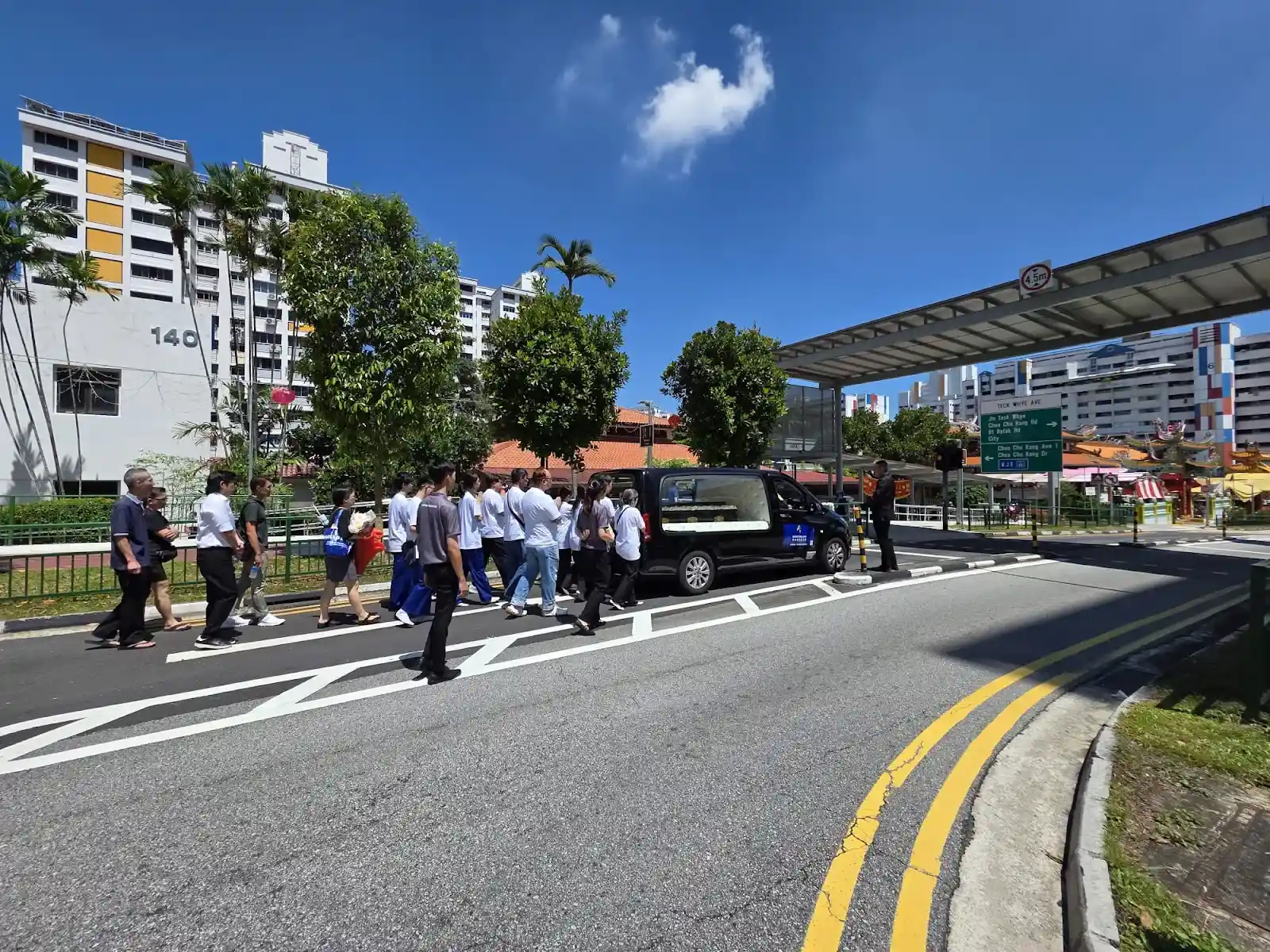
In many Singaporean funerals, especially Taoist and Buddhist ones, the procession begins on foot. The casket leaves the void deck, and the family walks a certain distance before boarding the bus or cars.
The “Send-off” Walk
This walk is symbolic. It represents the family accompanying the deceased on the first leg of their final journey. If you are an attendee, follow the instructions of the funeral director. Usually, the immediate family walks closest to the hearse. Friends and distant relatives follow behind.
Dress Code
If you are walking in the procession, ensure your attire is appropriate. In Singapore, comfortable but sombre clothing is best due to the heat. White, black, or dark blue are standard colours. You should strictly avoid wearing bright red, as this is the colour of celebration and is considered highly offensive at a funeral.
Silence
The walk should be conducted in silence or with quiet prayers. It is not the time for chatting, laughing, or catching up with old friends.
The Role of the Eldest Son or Chief Mourner
In Chinese traditions, the eldest son or chief mourner has a specific role, often walking directly behind the hearse, sometimes holding a joss stick or a photo. Do not crowd this person. Give them space to perform their duties.
Cultural Variations in Singapore Funeral Processions
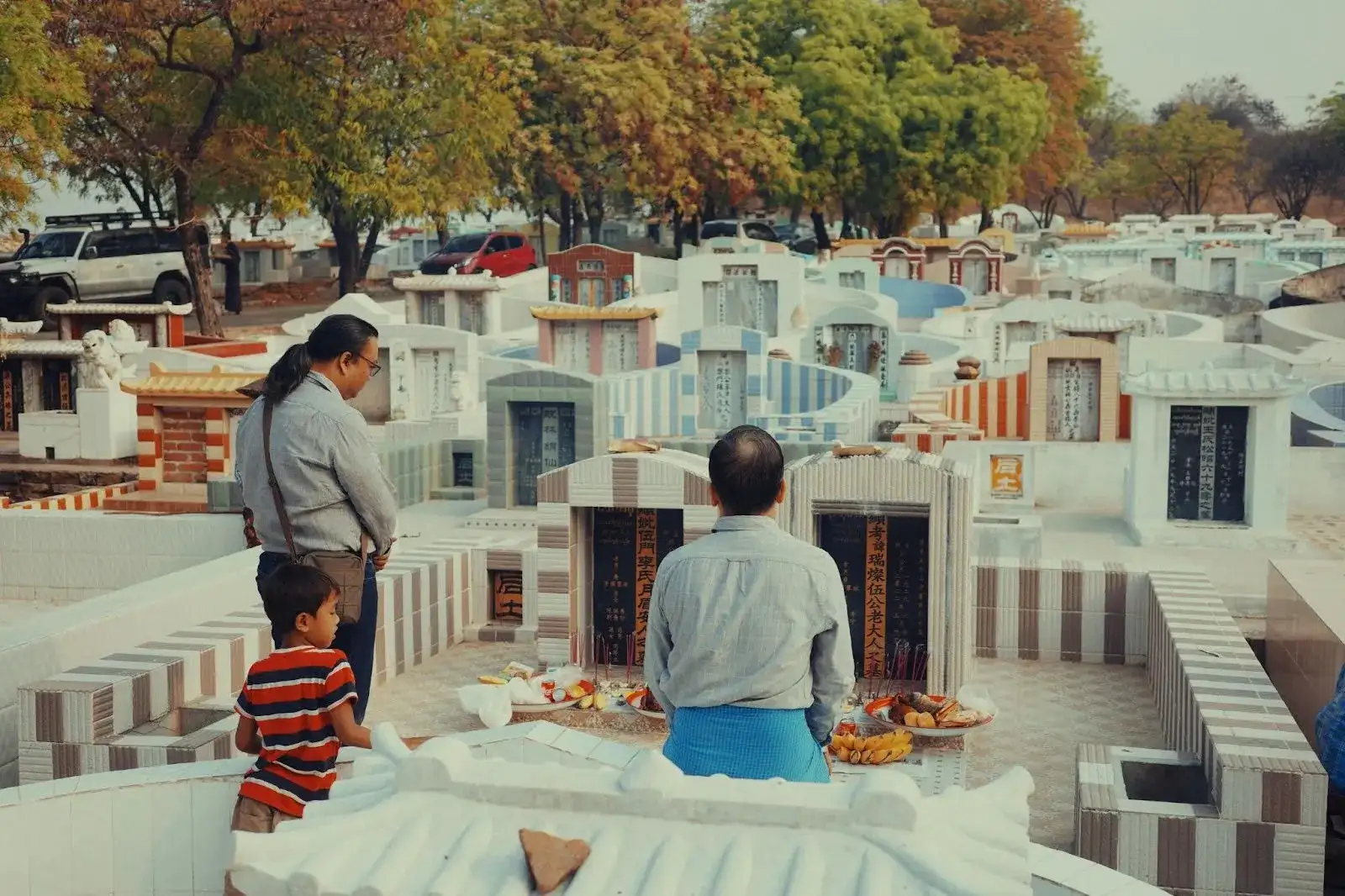
Singapore is a melting pot of cultures, and this is reflected in how funeral processions are conducted. While the traffic rules remain the same, the customs differ.
Chinese Funeral Processions
Chinese funerals (Taoist and Buddhist funeral) can be elaborate. You might see a musical band leading the way. This band might play traditional Chinese music or Western songs like “Auld Lang Syne.” The loud music is meant to announce the passing and sometimes to ward off evil spirits.
- The Lantern and Banners: You will often see lanterns indicating the surname and age of the deceased.
- Throwing Paper Money: Historically, family members would throw “road money” (joss paper) from the hearse to distract spirits. While strictly speaking this conflicts with anti-littering laws, it is often tolerated if done discreetly, though many families now opt to burn it at the designated burner instead to keep the roads clean.
- The “Pulling” Tradition: A long rope might be attached to the hearse, held by family members. This symbolises the family pulling the hearse, showing their reluctance to let their loved one go.
Malay/Muslim Funeral Processions
Muslim funeral processions are generally more understated and swift. Islam dictates that the deceased should be buried as soon as possible, often within 24 hours.
- Speed and Simplicity: The procession tends to move directly and efficiently to the cemetery (pusara).
- The Hearse (Keranda): The vehicle is often a van. In some cases, if the mosque is very close to the cemetery, the body might be carried in a “keranda” (bier) covered with a green cloth by male family members and congregants.
- Chanting: Those in the vehicle may recite “Zikir” (remembrance of Allah) or read from the Quran softly. There are no musical bands.
- No “Send-off” Walk: Generally, attendees board vehicles immediately. There is rarely a long walking procession on public roads.
Christian and Catholic Processions
The Christian funeral processions are marked by solemnity. They usually proceed from the church, where the funeral mass was held, to the crematorium.
- Solemnity: There are typically no marching bands. The mood is quiet and reflective.
- Hymns: Family members might sing hymns or pray the rosary inside the vehicles during the journey.
- Order of Service: The hearse leads, followed by the family limousine (if hired) and then guests.
Hindu and Sikh Processions
Hindu and Sikh processions can be quite visual and auditory.
- Chanting: You may hear loud chanting of God’s name (such as “Ram Nam Satya Hai” in Hindu traditions).
- Floral Decorations: The hearse is often heavily decorated with fresh garlands of flowers.
- Open Casket: In some traditions, the hearse has a glass panel, or the casket is open (if carried on a bier for a short distance) so the face of the deceased is visible.
Conclusion On Funeral Procession Etiquette
A funeral procession is one of the most solemn public events in Singaporean society. Whether you are a driver on the road, a pedestrian, or a mourner participating in the cortege, your behaviour reflects your respect for the deceased and their grieving family. By adhering to these simple rules, giving way, maintaining silence, and understanding cultural nuances, you contribute to a dignified send-off. The “final journey” is the last physical act of love the family can perform for the deceased, and your cooperation helps them do so with peace of mind.
If you require professional guidance on arranging a respectful and smooth funeral service, do not hesitate to reach out to us. We are here to guide you through every step of the process.
For immediate assistance, please contact us at Funeral Guru.
Frequently Asked Questions About Funeral Procession Etiquette
Do I Have To Stop My Car For A Funeral Procession In Singapore?
Legally, you are not required to come to a complete stop for a funeral procession in Singapore unless traffic signals (like a red light) dictate you must. However, it is considered proper etiquette to yield the right of way and allow the procession to stay together. If you are at a junction and the procession is moving through, wait for the last car (usually marked with flags) to pass before proceeding.
Can You Overtake A Funeral Hearse On The Expressway?
Yes, you can overtake a funeral hearse on Singapore expressways (like the PIE or CTE), provided it is safe to do so. Funeral hearses typically travel in the left-most lane at a slower speed. You should overtake on the right, ensuring you do not cut back in too sharply in front of the hearse. Do so quietly and without revving your engine unnecessarily.
What Is The Speed Limit For A Funeral Procession?
There is no specific “legal” speed limit exclusively for funeral processions; they must obey the standard road limits. However, out of respect and to keep the convoy intact, processions in Singapore generally travel between 30km/h to 50km/h on normal roads and slightly slower than the flow of traffic on expressways.
Are There Different Rules For Chinese And Muslim Funeral Processions?
While traffic rules apply to all, cultural etiquette differs. Chinese processions may feature a musical band and family members walking a short distance behind the hearse before boarding vehicles. Muslim processions are typically swifter as burial must be done quickly, and they generally do not use musical bands. Regardless of the religion, maintaining a respectful distance and silence is the universal rule.